
Cappadocia's underground cities: Derinkuyu, Kaymaklı and beyond
Round stone doors, ventilation shafts and low passages at Derinkuyu and Kaymaklı: why they were built, which to visit and how to handle tight spaces.
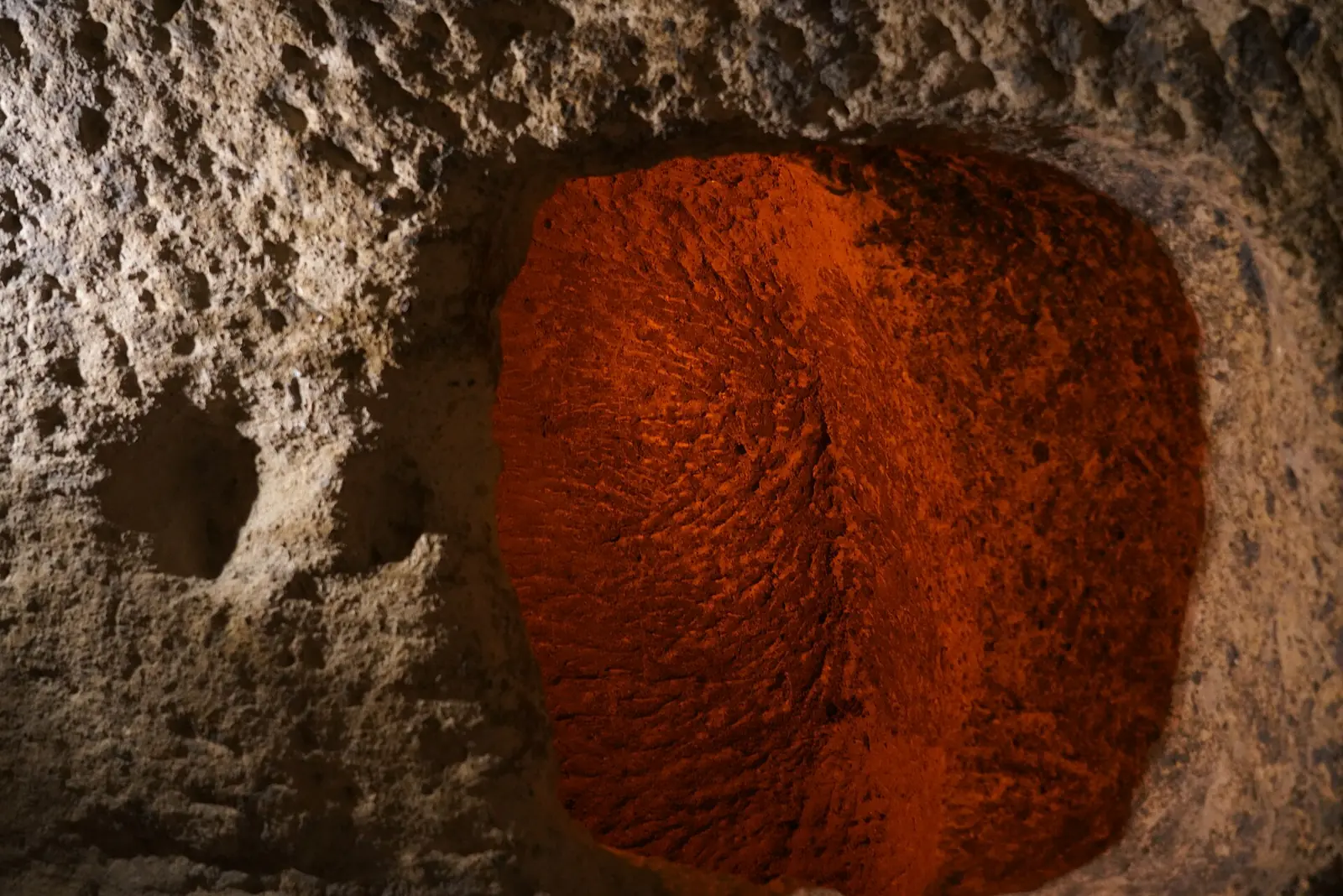
The most surprising thing about Cappadocia is not above ground but below it. Under the fairy chimneys and rock churches lies a network of cities carved into soft volcanic stone. Go down the steps and the outside noise fades, the air cools, and the everyday life of people who lived here centuries ago reappears in the dark. The region has many such underground settlements, but only a few are open to visitors. This guide gathers what you should know before you go, what to look at and how to stay comfortable in tight spaces.
Why did people go underground?
The origin of the underground cities is not entirely certain. The soft tuff is easy to carve, which led people over the centuries to dig storage rooms, stables and shelters below ground. In the Byzantine period these spaces were greatly expanded and used heavily as refuges, especially against raids that threatened the region. They are said to have served as shelter from time to time in later centuries as well. Another advantage of the underground is that it stays at the same cool temperature all year, which makes storing food and wine easier and means life could go on inside through scorching summers and freezing winters alike.
Derinkuyu is said to have been rediscovered in the early 1960s when a householder, looking for a lost chicken, came across a hidden room in his cellar. The details of the story vary, but the point is always the same: people had lived for years on top of a vast city without knowing it.
Life underground was a temporary arrangement for refuge, but look closely and an almost complete neighbourhood appears. Grain, wine and oil were stored in the cellars; food was cooked in communal kitchens; every level had its own ventilation. The hidden entrances, the stone doors that closed from inside and the many routes between levels show that these cities were built to a plan, to hold out for a long time.
Derinkuyu: the deepest one
Derinkuyu goes down about 60 metres, and roughly eight levels are open to visitors. Near the entrance you usually meet the stables; animals were kept on the upper floors, people below. Further down are kitchens (you can see soot on the ceilings), storerooms and wine presses. Round stone doors lean against the wall beside the passages and can only be closed from the inside; in danger they were rolled across to seal the way.
The detail you will remember most is the ventilation shaft. A long vertical channel that carried air down and was also linked to the water wells shows how a space this deep could breathe. On one of the lower levels is a church with a cross-shaped plan, and a large room that guides describe as a school or a place of religious teaching. Seeing these rooms makes you feel that this was not simply a hiding place but the living space of a community.
Kaymaklı: closer to Nevşehir, busier
Kaymaklı is closer to Nevşehir than Derinkuyu and is the most visited of the underground cities. The visitor route is marked, and in many passages you have to walk in single file. Here too you will see stone doors, a church, ventilation shafts and wide communal rooms, all joined by a winding path that feels like a maze. Remember that stone floors worn by centuries of feet can be shiny and slippery.
Which one to choose? For most guests the difference is small; both tell the same story. Derinkuyu is a little deeper and more vertical, Kaymaklı a little flatter and more crowded. The Green tour includes Derinkuyu; if you would like to see Kaymaklı, we can add it to a private day tour. Entrance fees are included in the price, so you do not queue for a ticket at the door. If you hold a Museum Pass, mention it when booking.
Quieter options: Özkonak and Mazı
If you would rather avoid crowds, two smaller underground cities are worth knowing. Özkonak, near Avanos, is known for details such as its stone doors and the speaking tubes that allowed people to communicate between floors. Mazı, around Ürgüp, is narrower and receives fewer visitors. Both can be closed from time to time for maintenance or restoration, so ask us for the current situation before planning. A private day tour is a good way to build a route that includes them.
Tight passages: who for, and how?
Underground cities are not easy for everyone. The ceilings are low in places and you may have to stoop or crouch; the stairs are steep and some passages are cramped. If you are claustrophobic, or have trouble with your knees or lower back, tell your guide at the start; you can turn back whenever you want. In that case the Red tour may be a more comfortable alternative, and we compare the two tours in Red tour or Green tour?
Once inside, follow the direction signs. The passages are lit but shadowy; stay out of side passages and closed sections, and do not climb on walls or doors. Early morning or late afternoon is usually calmer, and at busy times you may have to wait in narrow spots. Stay behind your guide and do not lose the group; it is easy to get lost in these places and hard to be found.
- Shoes: Wear closed, flat shoes with good grip. Stone steps can be damp and worn.
- Clothes: It is cool inside all year, so take a thin jacket. Wide skirts and large backpacks cause trouble in the passages.
- Children: An adventure for older children; possibly overwhelming for small or nervous ones. Decide together.
- Time: You usually spend between half an hour and an hour inside. Do not rush, and expect to wait in narrow places.
- Guide: The structures and their history only come alive when someone explains them, so go with a guide if you can.
Much of Cappadocia is experienced from the outside, as beautiful views. The underground cities are different: you experience them with your body, through the coolness, the smell of stone and the silence in a narrow tunnel. If you are curious, write to us or send a booking request straight away.